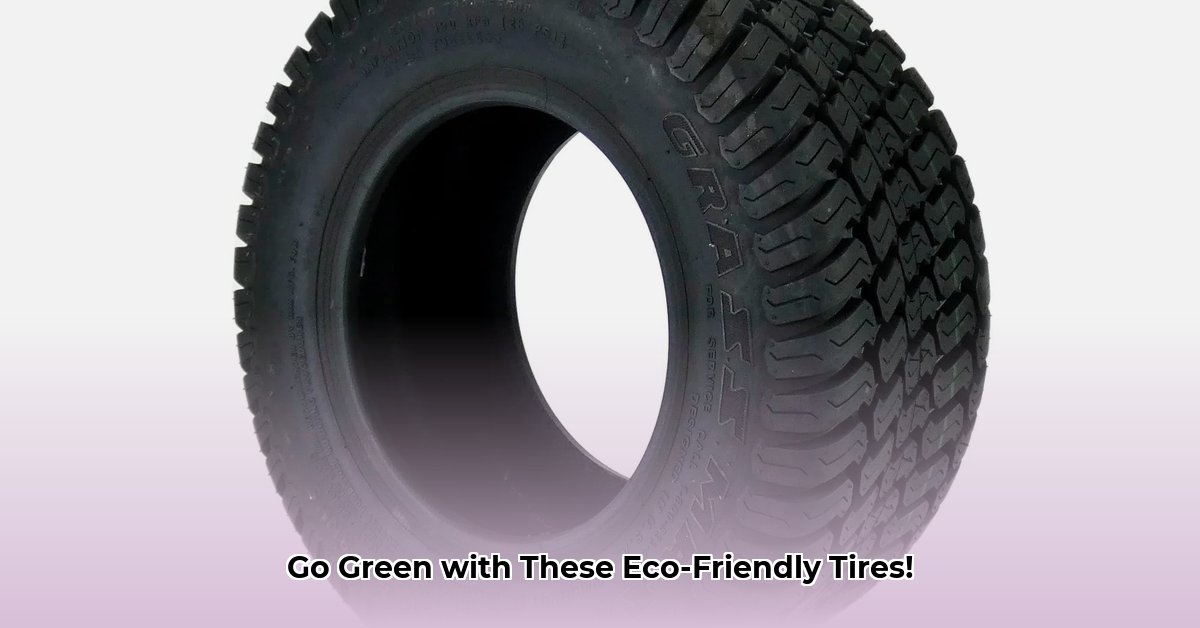
Choosing the right tires for your lawn tractor is more than just finding the correct size; it's a crucial step towards sustainable lawn care. This guide focuses on 16 x 6.50-8 tires, providing actionable insights to help you minimize your environmental impact while maintaining a healthy, beautiful lawn. For more on maintaining your tires, see this helpful guide on tire sealant.
Understanding Your Tire Options: Pneumatics vs. Flat-Free
For your 16 x 6.50-8 lawn tractor, you'll primarily encounter two tire types: pneumatic and flat-free. Pneumatic tires (filled with air) offer a smoother ride and superior traction, but are susceptible to punctures, leading to waste from tire replacements. Flat-free tires, constructed from solid rubber or similar materials, eliminate flats. However, their manufacturing process and potential performance trade-offs should be considered.
The Environmental Footprint: Beyond Punctures
The environmental impact extends beyond flat tires. Consider the materials used, energy consumption during manufacturing, and transportation—all contributing to a tire's carbon footprint. While flat-free tires reduce waste from punctures, their production might have significant environmental consequences. A longer-lasting tire, regardless of type, inherently minimizes overall waste.
Extending Tire Lifespan: Simple Maintenance Strategies
Proper maintenance significantly extends tire life, saving money and reducing landfill waste. Follow these steps:
Regular Air Pressure Checks: Maintain the correct inflation pressure (check your tractor's manual) to prevent premature wear. Low pressure increases fuel consumption and tire stress.
Tire Rotation: Rotate your tires regularly (consult your manual for frequency) to ensure even wear across all four tires. This simple step can dramatically extend their life.
Smooth Operation: Avoid aggressive maneuvers like sharp turns and sudden stops that place extra stress on the tires.
Proper Storage: When storing your tractor, use jack stands to lift the wheels, preventing flat spots from developing.
Sustainable Lawn Care Practices: Beyond the Tires
Sustainable lawn care encompasses more than just tire selection. Incorporate these practices:
- Reduce mowing frequency: Taller grass requires less mowing, conserving energy and reducing wear on your equipment.
- Optimize mowing height: Adjust your mower’s height to suit your grass type for optimal health and reduced cutting needs.
- Efficient watering: Water deeply but less frequently to encourage strong root growth and minimize water waste.
- Organic fertilization: Opt for organic fertilizers to nourish your lawn without harmful chemicals.
Choosing Sustainable Tires: A Detailed Comparison
Let's compare pneumatic and flat-free 16 x 6.50-8 tires:
| Feature | Pneumatic Tires | Flat-Free Tires |
|---|---|---|
| Puncture Resistance | Low | High |
| Ride Comfort | Excellent | Good |
| Traction | Generally Better | Can Be Slightly Lower |
| Lifespan | Variable; dependent on use and care | Generally Longer |
| Initial Cost | Typically Lower | Typically Higher |
| Environmental Impact | Higher (due to potential replacements) | Potentially Lower (fewer replacements, but manufacturing impacts need consideration) |
The optimal choice depends on your priorities. Pneumatic tires offer superior performance but require more frequent replacements and thus, contribute to more waste. Flat-free tires reduce waste from punctures, but may have a higher initial cost and potentially a shorter lifespan.
Step-by-Step Guide to Sustainable Tire Selection
- Assess your lawn: Note terrain type (flat, hilly, etc.) and soil composition.
- Determine equipment weight: Consult your tractor's manual.
- Research tire options: Look for 16 x 6.50-8 tires with high-ply ratings and eco-friendly manufacturing processes.
- Compare tread patterns: Balance traction needs with the desire to minimize lawn damage.
- Verify load capacity: Ensure the tire's load capacity exceeds your tractor's weight.
- Check customer reviews: Look for feedback on tire durability and performance.
- Make your purchase: Choose tires that align with your budget and sustainability priorities.
Key Takeaways:
- Sustainable tire selection is a critical element of environmentally responsible lawn care.
- High-ply rated tires offer longer lifespans and reduce waste.
- Consider tread patterns that minimize soil compaction and overall lawn disruption.
- Consistent tire inflation is essential for maintaining optimal performance and efficiency. Ignoring this simple step leads to premature tire wear and increased fuel consumption (for gas-powered tractors).
Remember, by combining smart tire choices with responsible lawn care practices, you can significantly minimize your environmental impact and contribute to a healthier planet.